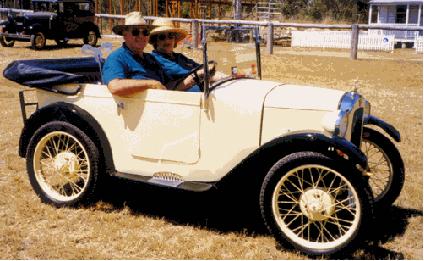
1939 Austin Eight

picture16

1939 Austin Eight

owned by Matt   

Matt lives in Huntington Beach, California.  And is  interested in hearing from other Austin eight owners and is seeking  information on  Austin Eight’s

                                       Celebrating the Classic: The 1939 Austin Eight

As car enthusiasts, there’s something truly special about vintage vehicles that evoke a sense of nostalgia and appreciation for the artistry of a bygone era. Today, I want to shine the spotlight on a classic gem: the 1939 Austin Eight. This charming automobile, first introduced in the late 1930s, epitomises the design and engineering principles of its time. Sporting a streamlined silhouette and elegantly curved lines, the Austin Eight offers a perfect blend of style and functionality. It’s remarkable to think how far automotive design has come; yet, the elegance of this car continues to turn heads even today. One of the most fascinating aspects of the Austin Eight is its compact size and lightweight construction, which made it an accessible vehicle for many families in the pre-war era. Under the hood, you’ll find a modest four-cylinder engine that, while not exceedingly powerful, was designed for efficiency and reliability—qualities that were highly valued during that time. In the USA, the Austin brand developed a loyal following, especially among those who appreciated the classic charm of British engineering. The Austin Eight’s affordable price and practicality made it a popular choice—an ideal companion for family outings and daily commutes alike. In addition to its historical significance, the Austin Eight boasts a delightful interior with a mix of elegant upholstery and simple yet functional design elements. The dashboard features classic gauges and charming vintage details, creating an inviting driving experience. Restoring or owning a 1939 Austin Eight is not just about having a vintage car; it’s about embracing history and enjoying the connection to a simpler time. Every ride in this classic offers a unique experience, transporting you back to the late 1930s, when life seemed to move at a more leisurely pace. So, whether you’re an avid collector or simply an admirer of classic cars, the 1939 Austin Eight is a model that deserves appreciation. It’s a reminder of the artistry and innovation of the past, and for many, it’s a symbol of adventure and cherished memories.


Austin Parts wanted and for sale (click here)

Austin A 40

Herman’s Austin A 40 –

Herman told me he bought the Austin in England and That “only an engine revision was needed”.  It seems this little Austin was consuming 1 litre of oil for every 100 Kilometres. Herman says the car is fine now and drives well. 

(note . . Oil consumption) Some say the A40 came with an ‘umbrella’ in the tool kit for mechanics when  working under a hoist)


picture13picture12

1949 Austin A40 Devon

11949 Austin A40 Devon owned by Keith Parsloe –

picture7

In the late Eighties Keith decided to shop around for an older car suitable for restoring. His first choice was a 1959 6 cylinder Chrysler Royal (those were the days) But after a fruitless search settled for an A40 Chassis and related bits     A few people told him it would never become a vehicle and be registered and on the road. Well that was all Keith needed and set out to prove them wrong. One mistake he did make though. It was not until he was well into the rebuilding process before he started taking photos Because he wanted to be able to work on the car, and also to be able to move the car to one side when other jobs came along, Keith scrounged up materials and knocked up a frame on some old coaster wheels, and included a pivot point so the body could be spun and locked in a suitable working position. This worked well and he reckons it saved him from getting a sore back!.

In the early nineties, the Austin, while not totally finished, was ready to be registered. Since then the work on the Austin stopped and Keith is getting too much enjoyment out of driving it to do the final “pretty up”
But you only have to look at the photo above (taken on a recent rally) to appreciate that Keith’s idea of a ” Final pretty up” is probably buffing the windscreen wipers

Austin parts for sale or wanted (click here)

                                                                                                  A Historic Milestone
Emerging onto the market in 1947, the Austin A40 Devon quickly captured the hearts of families and individuals. As one of the first new models produced post-war, it signified a major leap toward democratizing car ownership for the British public, showcasing the evolving design and engineering prowess of the era.

Striking Design and Features
The A40 Devon boasts an elegant design with appealing rounded contours and a signature grille that gives this vehicle a unique identity. Available in a range of attractive colors, it allowed buyers to select a model that reflected their personal style.

Beneath the hood lies a dependable 1.2-litre four-cylinder engine renowned for its efficiency. Coupled with a four-speed manual transmission, it delivers a smooth, enjoyable driving experience. Designed to accommodate up to five passengers comfortably, the A40 Devon offers generous legroom and a spacious interior, making it an ideal choice for family trips or daily commutes.

Experience the Drive
Taking the wheel of a 1949 Austin A40 Devon isn’t just about driving; it’s about reliving history. Owners often highlight the surprisingly nimble handling, particularly for a classic car. With its light steering and compact build, this vehicle is adept at navigating both city streets and scenic country roads. While it may lack the performance bells and whistles of modern vehicles, the A40 Devon’s charm lies in its simplicity and the genuine connection it creates between driver and road.

Cultural Relevance
The A40 Devon exemplifies British automotive heritage, representing an era when cars became attainable for the average citizen. More than just a car, it serves as a narrative of post-war recovery and the beginning of modern automotive design.
Today, car enthusiasts and collectors treasure the A40 Devon for its iconic lines and the nostalgia it evokes. Vintage car shows frequently feature these timeless vehicles, gathering admiration from those who either remember them fondly or appreciate their classic engineering.

A Lasting Legacy
Though production of the A40 Devon ended in the early 1950s, its influence on British automotive culture is still significant. Collectors and restoration experts actively seek out these vehicles to preserve their legacy, ensuring they remain a source of inspiration for future generations.
In conclusion, the 1949 Austin A40 Devon is far more than just a classic automobile; it represents a crucial chapter in history, a reflection of societal advancement, and an emblem of British resilience. For anyone who values classic cars, the A40 Devon is not just a vehicle; it’s an extraordinary treasure waiting to be discovered and cherished.

1954 Austin A40 Somerset

11954 Austin A40 Somerset       owned by Rob and Sylvia Charles –

picture6

Rob and Sylvia Charles 1954 Austin A40 Somerset

This  Somerset began its life in Australia by being off-loaded from a ship in Sydney in October 1954.

Thirty-seven were “Shanghaied” while on their way to New Zealand. Somehow, they ended up in a showroom for G&D Motors in Toowoomba, where they were sold to Thomas Young of Amby for eight hundred sixty-five pounds on November 5, 1954. They stayed on and around the farm at Amby for nearly forty years until they were traded in on a Chevrolet after Thomas Young died. Rob Charles swapped a four-wheel-drive Japanese Jeep for it.
Rob repaired the front end, replaced a couple of valves, replaced a little upholstery, and slapped on a coat of paint. Other than a new radio and the above-mentioned, it is a totally original car.

( Recent work includes (from memory ) a new head Gasket…….Tubby)

History of The 1954 Austin A40 Somerset.
according to Grammarly
a classic British car that features a charming design and a rich history. Launched in 1952, the A40 Somerset was produced until 1954 and was part of the Austin A40 series. It was designed by the renowned automotive designer, Gerald Palmer, and is known for its unique combination of practicality and style.

The A40 Somerset was powered by a 1.2-liter four-cylinder engine, which provided a balance of performance and efficiency for its time. Its body style was a popular four-door saloon, making it suitable for families and daily driving. The car was also notable for its spacious interior and comfortable seating, characteristics that appealed to the post-war market.

One of the key features of the A40 Somerset was its distinctive front grille and rounded fenders, which gave it a classic mid-century aesthetic. The model was well-received for its handling and ride comfort, contributing to its popularity among buyers during the 1950s.

Despite its modest production numbers, the A40 Somerset has retained a loyal following among classic car enthusiasts. Today, it is appreciated for its historical significance and charming design, often featured in vintage car shows and enthusiast gatherings. Collectors value the A40 Somerset for its nostalgic appeal and as a representation of British automotive design from the era.


1949 Austin A40

11949 Austin A40 owned by John and Jenny Hinde’s –

picture3

When John, Natalie, Timothy and Cassie, all jump into the Austin and Jenny throws in the picnic basket, and the folding table there is  not a lot of space.  But with the Essex ( see photo below) with a top speed of “Plod” it is not surprising that they use the  Austin for out of town rallies

ESSEX HERE

The Austin and the Hinde’s have rallied to Bundaberg several times, Biloela, Monto and over Easter the Austin rally in Rockhampton. In the Austin’s over Australia Rally in Toowoomba.
John says the Austin is pretty much original and “Exactly what would expect of a British car of that era” (whatever that means..)
Before John got the Austin in 1993 it had spent most of its life in Baralba near Moura, it had spent some 20 years in a shed.
This car was built in 1949. After September 1949 the A40 Devon’s were fitted with quarter vent windows in the front doors The previous A40s had a B shaped bumper with one piece front side windows

An extensive restoration to the Devon was  completed in May 1994. This was a good thing because somewhere hidden away at the end of the Hindes shed is a sad and incomplete Austin A40 Tourer, the Devon was bought as a source of spare parts. Looking at the Devon now one would be inclined to think it would have been a sin to have dismantle it
In the meantime the A40 Tourer awaits its turn.


ESSEX 6

The Timeless Charm of the 1924 Essex 6: A Vintage Classic. When it comes to vintage cars that embody the spirit of the early automotive era, the 1924 Essex 6 stands tall as a remarkable example of craftsmanship and style. With its elegant design and innovative features for its time, the Essex 6 holds a special place in the hearts of car enthusiasts and collectors alike. #### A Glimpse into History The Essex brand, originally part of Hudson Motor Car Company, made its mark in the automotive industry in the early 1920s. The 1924 Essex 6 was particularly notable as it introduced several features that were ahead of its time. It was designed to be an affordable yet stylish option for the middle class, boasting a six-cylinder engine that offered a smoother ride than the four-cylinder models prevalent in that era. #### Design and Features The sleek lines of the Essex 6 reflect the Art Deco aesthetic that was beginning to take hold in the 1920s. This car turned heads on the streets with its bold radiator grille and graceful body curves. Inside, the Essex 6 was spacious and comfortable, with ample passenger seating, making it perfect for long road trips or leisurely drives through the countryside. One of the standout features of the 1924 model was its powerful 50-horsepower engine. The six-cylinder configuration provided not just power but also a refined driving experience, making it a joy to drive. Additionally, the car was equipped with hydraulic brakes, an innovation that enhanced safety compared to previous braking systems. #### The Legacy of the Essex 6 Though production of the Essex brand wound down in the late 1930s, the legacy of the Essex 6 lives on. Today, it is celebrated at vintage car shows and events dedicated to preserving the history of classic automobiles. Owners of the Essex 6 often speak about the camaraderie found within the community of vintage car enthusiasts, as they share stories, restoration tips, and the sheer joy of driving these classic machines. Whether you’re a collector or simply an admirer of vintage automobiles, the 1924 Essex 6 represents an era of innovation and style, reminding us of the joy that can be found on the open road. Its timeless appeal and historical significance make it more than just a car; it’s a piece of history that continues to inspire generations of car lovers. In conclusion, the 1924 Essex 6 is not just a vehicle; it’s a testament to the ingenuity of the automotive industry during the Roaring Twenties. Its elegance, performance, and affordability make it a classic worth celebrating, solidifying its place in the world of vintage cars. If you ever get a chance to see one in person or, even better, take it for a spin, don’t pass up the opportunity to experience the charm of this remarkable piece of automotive history.

1961 Austin Healy Sprite

11961 Austin Healy Sprite  Owned by  Ian Sanderson and  Jill Mcleod. Gladstone. –

picture2

      A Classic British Fun Car
The 1961 Austin Healey Sprite, specifically the Mark II model, is a charming and classic British sports car that has captivated enthusiasts for decades. Following the Frogeye Sprite, the Mark II made significant upgrades, maintaining the beloved 948 cc engine while incorporating enhanced features such as larger 1¼ inch SU carburetors. This upgrade resulted in a modest increase in power, bringing the output to 46.5 bhp, a performance boost that British drivers can truly appreciate.

One of the most notable changes was the transition from the iconic Frogeye styling, which featured headlights set atop the wings, to a more functional design. The headlights were repositioned for improved visibility, and their centred arrangement echoed the design seen in Land Rover models of the time. This new aesthetic modernised the Sprite and laid the groundwork for the future MGB model.

Despite its small engine, the 948 cc powerplant offered plenty of punch, making the Austin Healey Sprite an ideal vehicle for navigating Britain’s winding country roads. It provided an exhilarating driving experience for young couples eager for weekend getaways and picnics in the countryside during pleasant weather.

On a clear day, drivers could expect to reach speeds just over 80 miles per hour. However, maneuvering at those speeds required a certain level of driving skill, as cars from that era demanded competent handling. The 1961 Sprite combined spirited performance, an engaging driving experience, and affordability—making it a quintessential British fun car that remains a celebrated choice for classic car enthusiasts and collectors.

### Why the 1961 Austin Healey Sprite is a Must-Have for Collectors

– **Timeless Design**: The Sprite’s sleek lines and updated styling continues to turn heads today, making it an appealing classic car for collectors.
– **Engaging Driving Experience**: With its lightweight build and responsive handling, driving a Mark II Sprite is a nostalgic journey back to the golden age of British motoring.
– **Affordability**: Compared to many classic cars, the Austin Healey Sprite is relatively affordable, making it an accessible choice for new collectors.
– **Strong Community**: Joining the Austin Healey car clubs or attending events can help connect you with fellow enthusiasts and preserve the legacy of this iconic vehicle.

In conclusion, the **1961 Austin Healey Sprite** stands out not just as a fun car, but as a piece of automotive history. Its blend of charm, performance, and straightforward engineering makes it a beloved choice for anyone passionate about classic cars. Whether you’re looking to take it for country drives, join a classic car show, or enjoy the nostalgia it offers, the Sprite is an excellent addition to any collection.

1924 Austin 12

bundy1924 Austin 12  Owned by    Geoffrey and Mariae Doherty 

picture2

When Geoffrey purchased this car in 1969, it was in ‘basically complete’ condition; it’s an excellent term. But it really means that the new owner will find most of the parts he will need to recondition all in one spot. The car spent a few years at Curtis Island before Geoffrey bought it. One of the items missing was the clock. It seems the original owner removed it in 1956 before it was sold to the Curtis Island owner. In 1988, the clock found its way back where it belonged when Geoffrey managed to negotiate its return to the original owner.

picture3

In November 1921, the Austin Twelve was introduced as a smaller version of the Austin Twenty, which had been introduced in 1919. At that time, the Austin company faced financial difficulties and had been in receivership for six months. The vehicle had a 12.8 horsepower engine with low-speed solid torque. Initially, only a tourer model was available, but by 1922, three body styles were offered, with annual sales peaking at 14,000 in 1927. The engine capacity increased from 1661 cc to 1861 cc in 1926. As the 1920s progressed, saloons became more popular.

Production of the Austin Twelve continued until 1939, and the last cars were made for the War Department in 1940. In 1933, the public began referring to it as the Heavy Twelve to distinguish it from newer 12hp models. The car received updates over the years, such as the upgrade from artillery-style wheels to wire wheels in 1933, the replacement of magneto ignition with coil ignition in 1935, and the addition of synchromesh between the top two gears in the gearbox in 1934. The factory body range was updated, and fabric-covered cars became less fashionable. After 1934, no open tourers were produced.

The Austin Twelve name reappeared in the Austin catalogue for several years. In 1947, the Austin A40 Dorset and Devon saloons were introduced.

The Austin Twelve is remembered for its durability and is well-supported by clubs and registers worldwide. The car had effective brakes, smooth steering, and comfortable suspension. Noteworthy features included easily changeable gears, a large horn button on the steering wheel, and a reliable steering gear. At a motor show in October 1924, various improvements were announced, including brakes applied to all four wheels and using cable for parking. The carburettor did not have a strangler, and handbrakes were used for parking. The steering gear utilized a worm and worm wheel, and the suspension included half-elliptical springs, with the rear springs being underslung.


Submit a classified advert.

A collection point for vintage & classic car parts

please use – Year, Make, Model format with contact details, etc

Click Here for the memory jog

If you have parts for sale or parts wanted, list them below in the

‘LEAVE A REPLY/ COMENT‘ section

(bottom of page)

please use – Year, Make, Model format with contact details, etc

1940 Austin 10 Sedan

picture11940 Austin 10 Sedan  Entry number 50 Driver Reg Harris Navigator Pam Harris

picture25

Restored By owner Completed 1984 Owners: Reg and Pam Harris

This Austin 10 was originally purchased by Mr. Thomas Royal of Marlborough from Fuchsia Garage in Marlborough on the 24th April 1941. Thomas Boyle handed it on to his niece, Miss Lydia Hill in 1936, the mileage at this time was around 23,000 The Austin was  repainted at this time. In 1970 It was sold to a cousin Mr. D Hills of Ipswich who gave it to his daughter Leanne Hills. Reg Harris (present owner) paid Leanne Smith $325 in July of 1975 To become the New owner when the Mileage was around 39,800 . Reg says he “tidied it up for the Peregian National Rally (Mid 1976) In 1983 the Austin was repainted in the original colours and re-upholstered by Reg and by this time the mileage had reached 52,000. The car still retains the original Registration Plates Q338 344

1949 Austin Sheerline

picture3

Owned by Alan and Leanne Dawes

The Austin Sheerline was a luxury car produced by the Austin Motor company after the end of World War II. Its production period extended from 1947 to 1954 and its primary commercial goal was to allow the car lovers, to experience the luxury in the style of the contemporary Rolls-Royce or Bentley but at a much lower price.

The Unique technical features of the Austin Sheerline includes:

Austin Sheerline model A110 had 3460 cc straight 6 overhead valve engine

Model A125 boasted of a 3995 cc engine capable of delivering 125 bhp.

The chassis varied from 9 feet 11 1/4 inch wheelbase for the saloon to 11 ft for the limousine version (started in 1950).

The 1949 model weighed in at around 1850 kg and to maintain performance of this heavy car a low final drive ratio of 4.55:1 with 16 inch tyres was fitted.

Austin Sheerline’s suspension was by coil springs at the front and half elliptic leaf springs at the rear.

The 1949 Austin Sheerline was capable of a top speed of 82 mph

In 1954 production ceased with the Austin luxury category passing to the similar A135 Princess Mk II which had also been in production since 1947 and would continue until 1956. Still the Austin Sheerline is heralded as one of the most luxurious classic cars of all time. During its production period, around 8000 cars were sold, but now a days Austin Sheerline is becoming quite rare and resultantly a vintage collector’s item.

1929 Austin Seven –

picture1

owned by  Trevor and Bev McCulloch

The Austin 7 was one of the most popular cars ever produced and was licensed and copied by companies all over the world. Its production period extended from 1922 to 1939, which was a significant mark of its popular demand. Over 290,000 cars of this make were sold all over the world. The Austin 7 technical specifications are characterized by a Wheelbase of 6 ft 3 inches and a light weight of 794 pounds. The engine required for adequate performance was of 747 cc side valve which was quite capable of a modest 10 hp output. Four cylinders 747cc, 56 mm bore by 76 mm stroke, side valve engine which was composed of an aluminium crankcase, cast iron cylinder block and cast iron cylinder head with Pressure lubricated crankshaft running in two bearings. Back axle was of spiral bevel type with ratios between 4.4:1 and 5.6:1 . The chassis looked like an “A” with the engine mounted between the stroke channel divisions at the narrow front end.

Austin 7 boasted of a rear suspension which cantilevered from the rear of the chassis via by quarter elliptic springs while at the front the beam axle it had a centrally mounted half elliptic transverse spring.

A significant sign of the Austin 7’s commercial capabilities was that the first BMW models were produced and sold as licensed Austin 7s, as were the original “American Austins”. In France, they were made and sold as Rosengarts while in Japan Nissan also used the vintage Austin 7 design as the basis for their original cars.

As a vintage car, the  Austin 7’s popular attraction is still quite stunning and has a widespread devoted backing from people of all communities.