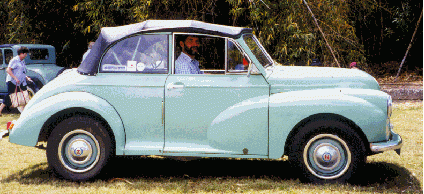
Morris Minor – Travelor


The Morris Minor Traveler: A Timeless Classic of British Motoring

Grammarly says

The Morris Minor Traveler, an iconic piece of British automotive history, has captured the hearts of car enthusiasts and collectors for decades. Launched in 1953, the Traveler variant of the beloved Morris Minor series combined practicality with charm, making it a favorite among families and adventurers. In this blog, we’ll explore the history, design, specifications, and enduring appeal of the Morris Minor Traveler, optimizing for search engines to ensure car lovers find this treasure.

A Brief History of the Morris Minor Traveler
The Morris Minor, designed by Sir Alec Issigonis, was first introduced in 1948. It aimed to create an affordable, reliable vehicle for the masses. In 1953, the Traveler was born, featuring an innovative wood-framed construction that set it apart from many contemporary cars. Known for its distinctive side windows and spacious rear compartment, the Traveler quickly became a symbol of leisure and family outings in post-war Britain.

Mlorris Minor Travelor
Prettiest car ever

Design Features: The Charms of the Morris Minor Traveler
The Morris Minor Traveler’s design perfectly blends functionality and aesthetic appeal. Here are some of the key features that make it unique:

Wooden Framing: One of the most recognized attributes is its unique wooden body framework, made from ash, which creates a warm and inviting appearance. This nostalgic detail adds character while also enhancing its sturdy construction.

Spacious Interior The Traveler offers ample room for passengers and luggage, making it ideal for family trips. Its rear seat folds down, providing versatility for transporting anything from picnic baskets to camping gear.

Classic Styling The rounded edges, chrome accents, and classic paint colors evoke a sense of nostalgia, appealing to vintage car lovers and those seeking a connection to mid-20th-century design.

Specifications of the Morris Minor Traveler
Engine
Initially fitted with a 948cc engine, later models were upgraded to 1098cc, balancing efficiency and performance for city driving and longer journeys.

Transmission
The Traveler typically featured a four-speed manual transmission, allowing for an engaging driving experience.

Fuel Economy
Known for its thriftiness, the Morris Minor Traveler offers excellent fuel efficiency, making it a budget-friendly option for navigating the countryside or city streets.

The Morris Minor Traveler Today
The appeal of the Morris Minor Traveler hasn’t waned; in fact, it has flourished among collectors and classic car enthusiasts. Clubs and gatherings celebrate these vehicles, ensuring that the community remains vibrant. Restoration projects are common, with many enthusiasts investing time and resources to preserve the original integrity of these charming vehicles.

Tips for Owning a Morris Minor Traveler
If you’re considering adding a Morris Minor Traveler to your collection or simply want to know more about maintaining one, here are some helpful tips:

Regular Maintenance
Keep up with routine checks to ensure the engine, brakes, and electrical components are in good condition.

Rust Prevention
Given the age of many Travelers, it is essential to look for rust spots and treat them promptly for preservation.

Join Enthusiast Clubs Connecting with fellow Morris Minor fans can provide invaluable resources and support for maintenance or restoration projects.

Conclusion:
The Enduring Legacy of the Morris Minor Traveler
The Morris Minor Traveler isn’t just a car; it’s a piece of history that evokes memories of family vacations, road trips, and the simple joy of travel. With its unique design, practical features, and historical significance, it continues to charm new generations. Whether you’re a long-time owner or a newcomer to the classic car scene, the Morris Minor Traveler remains a beloved symbol of British motoring.

Share your experiences or favorite stories about this classic car in the comments below!


1929 Morris Cowley

oz-2000AUS 2000 INTERNATIONAL RALLY

photo by Pat Davis

1929 Morris Cowley Entrant number 49 Driver Bob Perry Navigator Truus

Morris Garages may not be a name familiar to anyone but vintage car buffs, but everyone is familiar with the popular MG, which is actually the Morris Garages’ name shortened to its initials. These initials, within the well-known octagon, were first seen on the running boards of the 14/28 MG Super Sports Morris in 1924.

The company was the Oxfordpicture11 distributor of Morris cars and the MG logo was officially adopted in 1929. Morris Garage began as a bicycle and motorcycle shop. The owner, William Morris, was eventually awarded the title of Lord Nuffield in honor of his considerable contributions to the British automobile industry.

The diminutive Morris Minor was developed as an economic alternative to the company’s more extensive and costlier six-cylinder models. Two Morris Minor models were produced: a two-seater fabric Saloon and a four-seat Tourer, which was less costly than the more popular Saloon.

Demand for these popular little cars necessitated limiting color choices in order to keep up with production demands. Fabric models were available only in Niagara Blue and the newer Folding-Head Saloon in brown.

The Morris Minor (1929-1932) was featured in several models:

A 20 HP Fabric Saloon, four-seat Tourer, Sports Coupe, and the best-selling two-seater with dickey seat. This model’s 11.9 HP water-cooled engine powered by a four-cylinder in-line 1548 cc, designed with 69.5 MM bore X 102 MM stroke aluminum alloy pistons. Additional specifications included a three-speed gearbox, spiral-gear-driven camshaft, coil ignition, and a four-wheel, cable-operated brake system.

1929 Morris Cowley

Exploring the 1929 Morris Cowley: A Classic British Motorcar

The 1929 Morris Cowley holds a special place in the hearts of vintage car enthusiasts and classic automobile collectors alike. Known for its elegant design and reliable performance, this model encapsulates a significant era in automotive history. Join us as we explore its features, history, and enduring charm.

A Brief History

The Morris Motor Company, founded by William Morris in 1912, aimed to produce affordable vehicles for the masses. The Cowley was introduced as a more upscale variant of the popular Morris Oxford, designed to meet the growing demand for personal transportation in the 1920s. By 1929, the Cowley had become a favorite among drivers seeking quality and style without breaking the bank.


Distinctive Design

The 1929 Morris Cowley showcases the classic design characteristics of the late 1920s. The Cowley embodies vintage appeal with its sleek lines, gracefully arched fenders, and elegant grille. Available in various body styles, including two-door and four-door saloons and a charming open-top model, the Cowley offered versatility to meet diverse consumer preferences.


One of the standout features of the Cowley is its spacious interior, designed with comfort in mind. The roomy cabin features plush seats and a dashboard equipped with essential gauges, reflecting the attention to detail that Morris was known for. The era’s craftsmanship is evident in every aspect of the car’s design.


Under the Hood

The 1929 Morris Cowley is powered by a 1.0-liter four-cylinder engine, delivering a modest yet respectable performance for its time. With a top speed of around 50 mph, it was well-suited for leisurely country drives and urban commutes alike. The four-speed manual transmission provides drivers with greater control, making it an enjoyable ride on both paved roads and uneven terrains.

The Morris Cowley’s Legacy

The Cowley became synonymous with practicality and affordability, making it popular among families and individuals during its heyday. Its robust build and solid engineering meant it could withstand the test of time, with many models still in existence today, cherished by collectors and vintage car enthusiasts.

Owning a 1929 Morris Cowley is not just about possessing a piece of machinery; it’s about preserving a piece of history. These cars often become a focal point at car shows and vintage gatherings, where they attract admirers who appreciate the craftsmanship and history behind them.

Conclusion

The 1929 Morris Cowley is a testament to the ingenuity and spirit of early 20th-century automotive design. Whether you’re a collector, a vintage car enthusiast, or simply someone with an appreciation for classic vehicles, the Cowley is a remarkable representation of a bygone era. Its blend of style, comfort, and practicality continues to captivate those who encounter this wonderful piece of motoring history.


If you ever get the chance to see one in person or even get behind the wheel, take it! The experience of driving this classic car is nothing short of magical. So, here’s to the 1929 Morris Cowley—a classic that will never go out of style!


1955 Morris Minor Ute

1Allan and Janet Jones        1955 Morris Minor Ute series 2

picture13

Alan Jones picked up this little Ute from the original owner Mal smith in Gladstone, 1975.  Having parted with  $500 he became the proud owner of a complete car, and a bit of rust. As you can see from the photo’s since that time the car has been totally dismantled and  rebuilt.

Morris minor 1,00 Gearbox and Motor, Paint Acrylic Colour Monterey Green

30 mpg  – Registered and driven to work daily.

Above pic shows some new metal in the back half

1958 Morris Minor 1000 Ute.

1

Ken Whittakers 1958 Morris Minor 1000 Ute.  Ken has had this vehicle for seventeen years and it is still putting in a good days work.  It is his Work Ute. Ken says he is the second owner, and he has the original Operators manual etc.

picture12

This most loved of British cars was designed by Alec Issigonis toward the end of the Second World War.  His brief was to produce a small  family car capable of long production runs He came up with the Minor.  Independent front suspension, rack and pinion steering, good road holding, easy low cost replacement parts and, above all economy and reliability made the car an instant success when it first came off the production line in 1948.  It remained unchanged except for an increase in engine power and small exterior details for the next 24 years.  The fact that it remains a desirable and useful everyday  car so many years is a tribute to the genius of Sir Alec Issigionis.


Morris Oxford Ute

1Morris  Oxford  Ute owned by Bill Swindells

A quick look at Bills next project,   This Morripicture3s Oxford was delivered to bills back yard with the help of several Club members,  A quick look inside, and a gentle poke with a finger around some of the lower parts is enough to say this is not going to be a quick easy restoration. But this is the way Bill likes them, no up front costs.

But bill has a lot of parts from an earlier Scrapped ‘Oxford’

max says:


This is actually a Morris Cowley MCV = not an Oxford. I used to have one way back in the early 80s & I think I still have the manual for it somewhere at home.

1954 Morris Minor

1

2


1954 Morris Minor Series II Sedan

Fully restored and painted to its original Austral blue, the engine was completely rebuilt in 1999. The original Series II gearbox has been installed along with steel belt radial tyres, disk brakes, telescopic shocks (front), VW taillights, and halogen headlights. The interior has been fully relined with new door trims, hood linings, seat trims, and window rubbers. This car has been used daily for the last five years and has been very reliable.


A brief history of the Morris Minor


Morris Minor

picture5

Owner  Alan Dawes

The Morris Minor was a well established and respected small, family sized car, which contested for the title of “the world’s supreme small car” for over 3 decades of production history in the form of several renowned variants.

The Minor offered several technical innovations at a budget price which characterized its public appeal. The Minor, which was known as the Mosquito during development was originally planned to be powered by an air-cooled, horizontally-opposed 800cc four-cylinder engine. For a number of reasons, including the relaxation of Government legislation which had taxed larger-capacity engines, production models were actually fitted with the reliable old 918cc side valve unit.

The Minor’s several variants boasted of numerous innovative features such as:

The mono-construction body.

Independent front suspension.

Seating arrangements, with all passengers seated within the wheelbase.

Superb, pin-sharp rack-and-pinion steering.

In 1956 Morris Minor fans were  thrilled by the introduction of the Morris Minor 1000, powered by an improved A-series engine of 948cc S4 OHV. The new engine gave the 1000 the capability of higher cruising speeds and generally more flexible drivability.

In 1962 what would be the last of the Morris Minor / 1000 series derivatives arrived on the scene, the (1098cc) Morris 1000. The new 1000 introduced some worthwhile improvements, the biggest change of coarse being the new, larger capacity engine and the new dashboard layout.